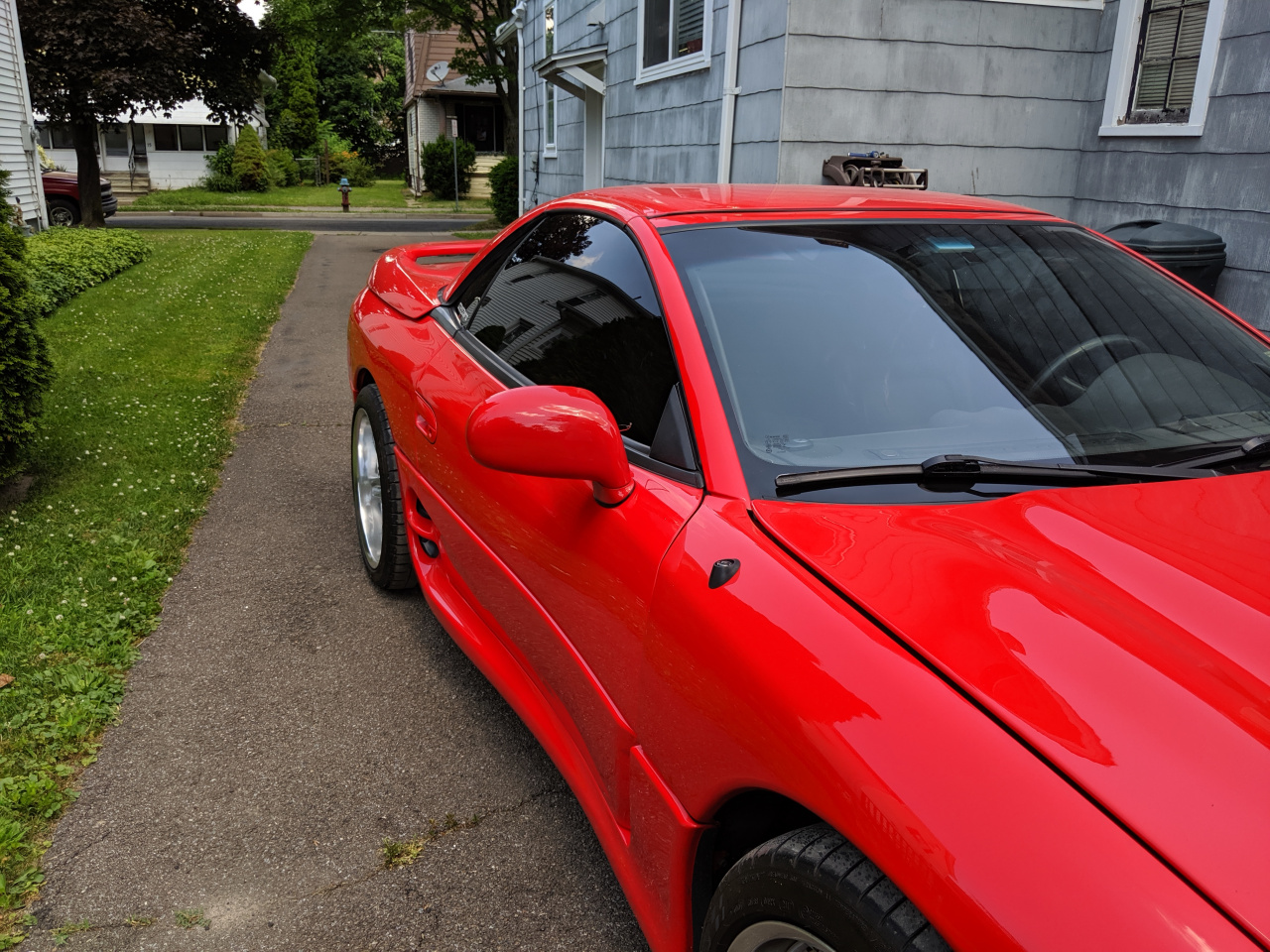
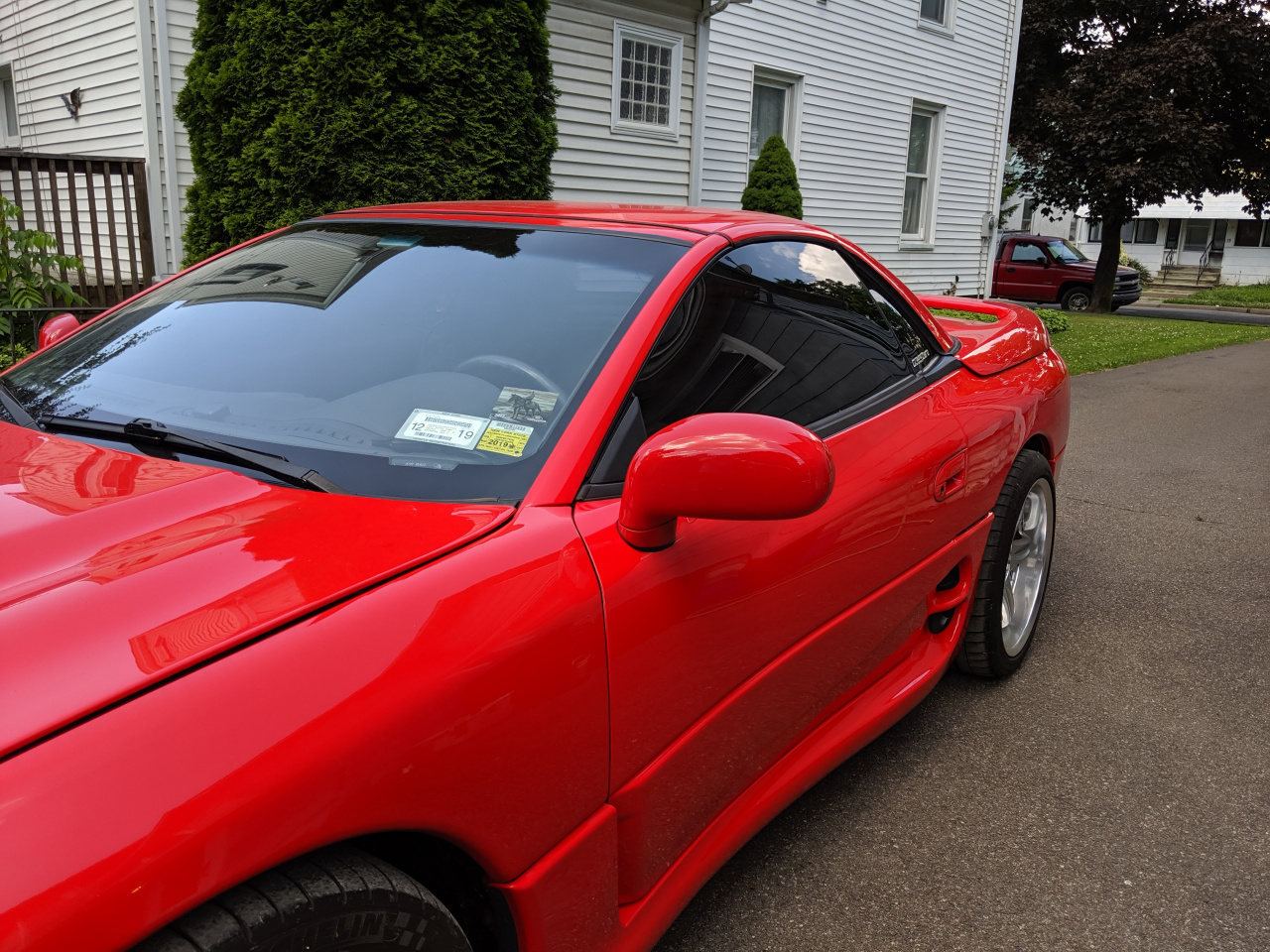
Fast forward to last year, I began the endeavor. I got as far as getting them designed, printed, and installed before BRG but still had to wire them in and get the controller board made up.
At first, I thought I could just "mirror" the bases. So I had a friend 3d scan them. Unfortunately, this didn't work as the actual mirror parts are also designed for RHD. So the angles and heights were still off.
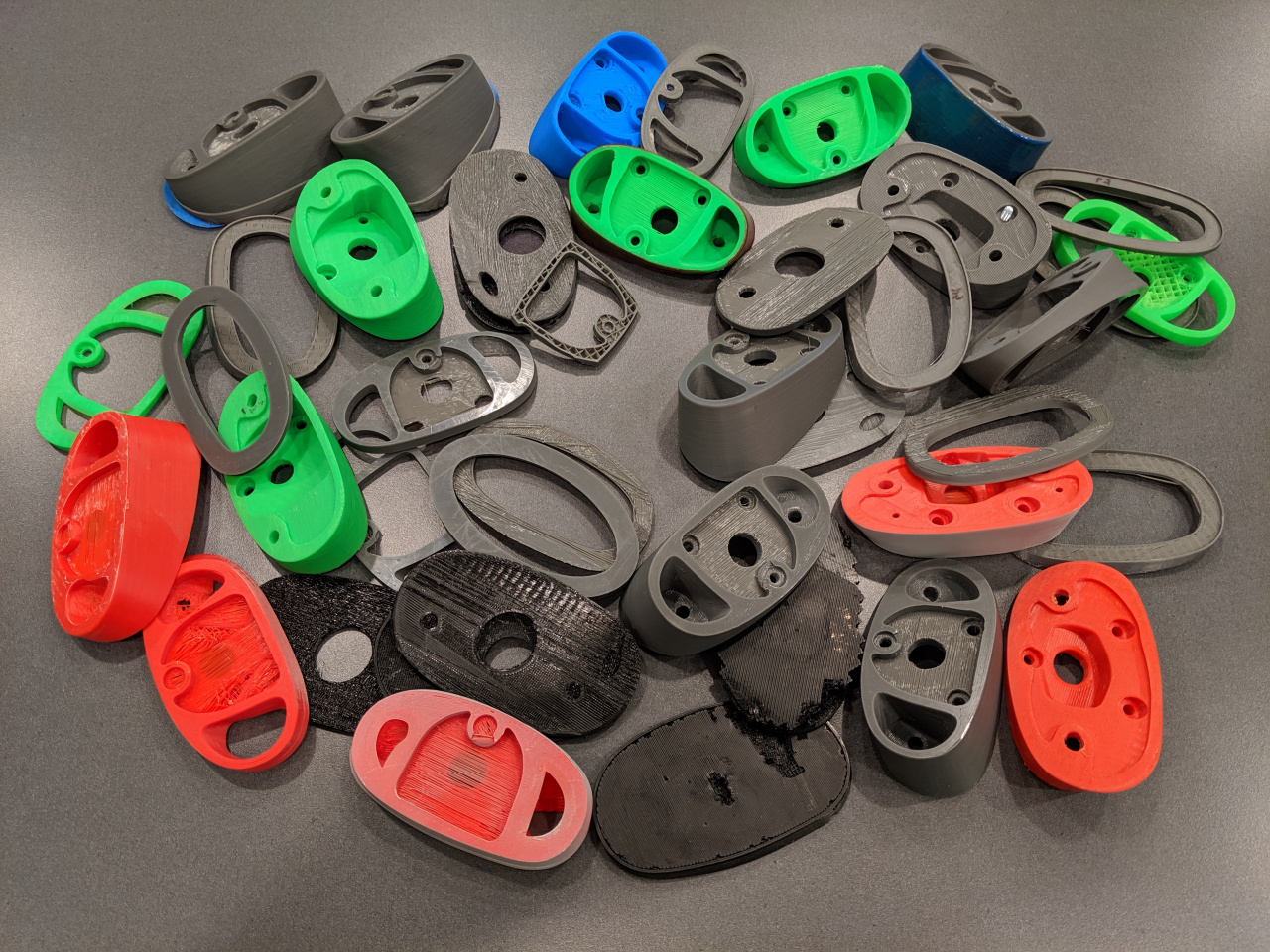
I undertook my most complicated design yet. I learned a lot about solid works lol. I ended up designing them from scratch. Had to also run a ton of test prints to get the angles and mounting surface to match the door skin. I started by modeling both skins using a gauge, that got me close but not perfect.
Another random problem I had was since my car was repainted, the paint was flaking around the mirror base. The shape of the base was different enough so you could see it. So I expanded the base to cover it up. Most cars would have a ton of dirt staining even if they weren't repainted.
More complexity...
The base/door interface is a softer plastic so the mate doesn't have to be perfect and adds a bit of cushion. I also designed these and even added drain holes that don't just drain into the door hole. I used black nylon for this. What a problematic material to print!
And more...
Since I am twisting the bases, there are a couple problems. It's now hard to get to the screws so installation is a pain with a special sequence and using hex socket bolts installed with ball end keys.
More...
If I twisted the bases the full amount, the mirrors now looked funny. One sticking in too far the other too far out. So I split the difference by angleing the mirror glass with spacers.
TTWWP!
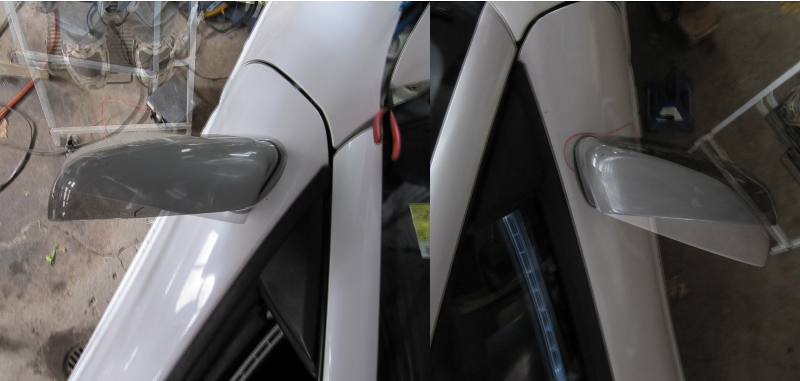
Here's an overlay of the problem.
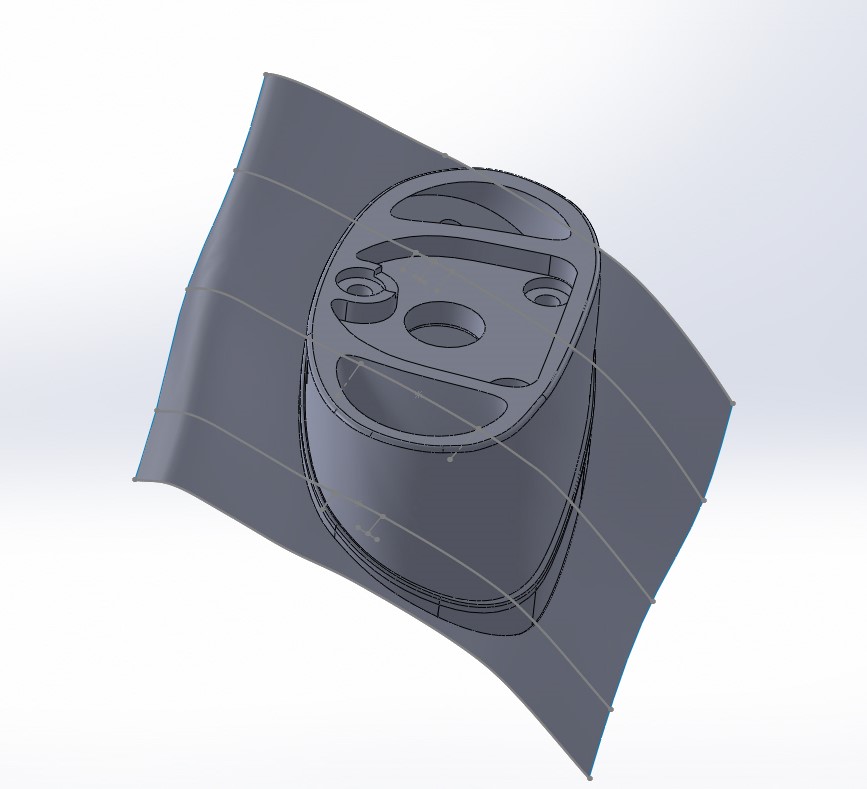
An early model of the door skin, nylon interface, and adapter.
Angled spacer for mirror glass
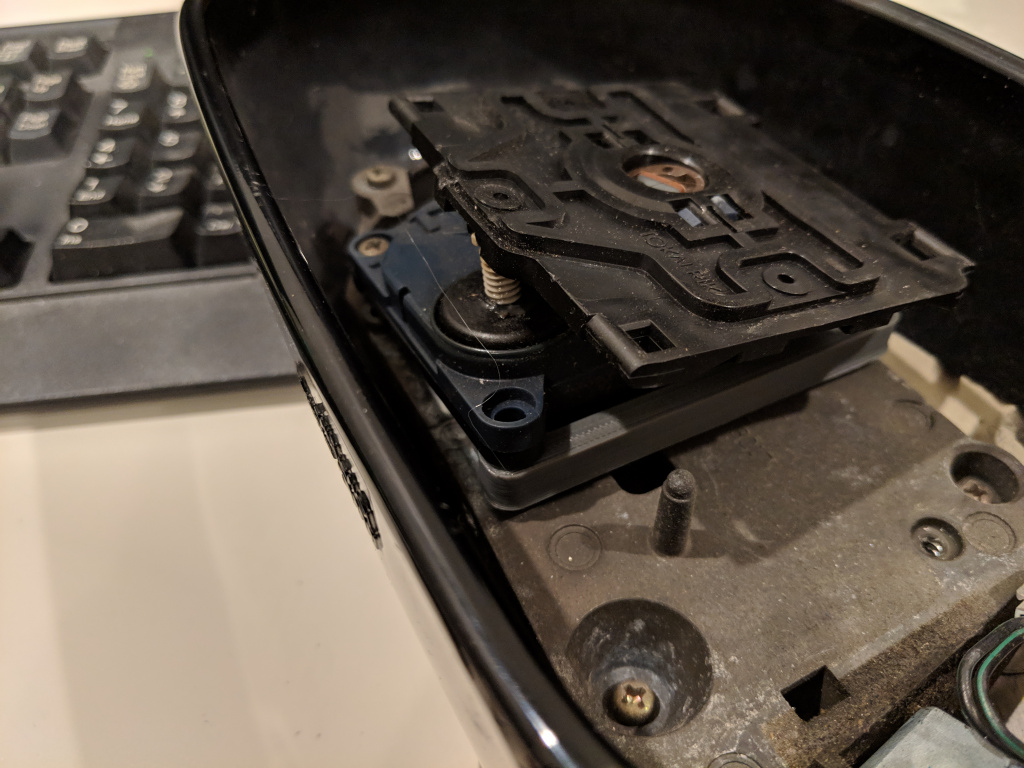
Early test piece
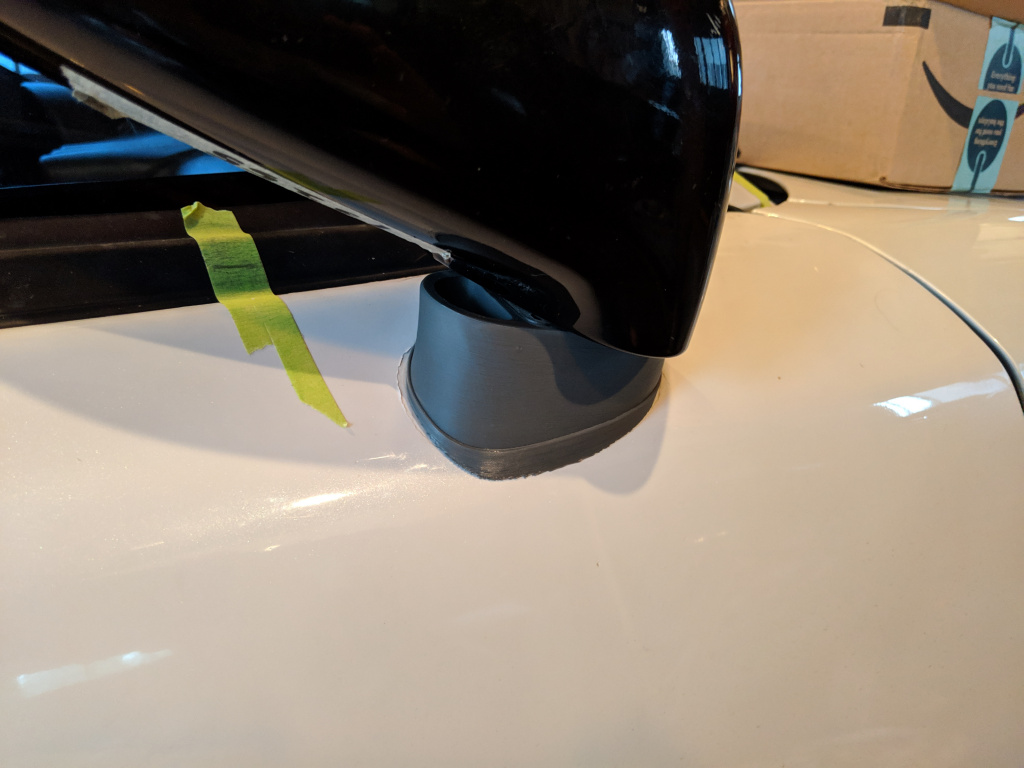
Interface test, showing how it doesn't cover the same edge as the stock bases.
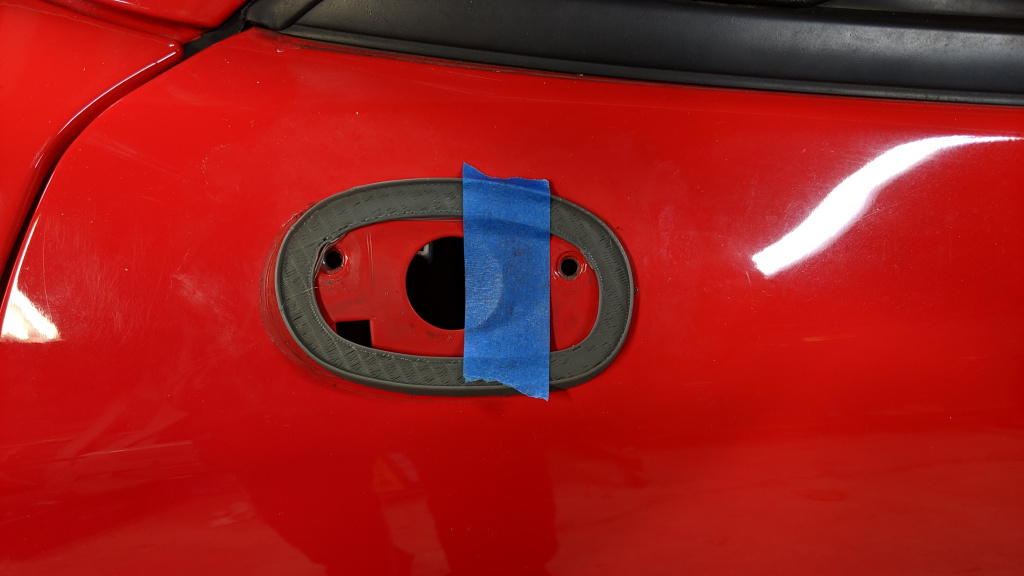
Nylon base
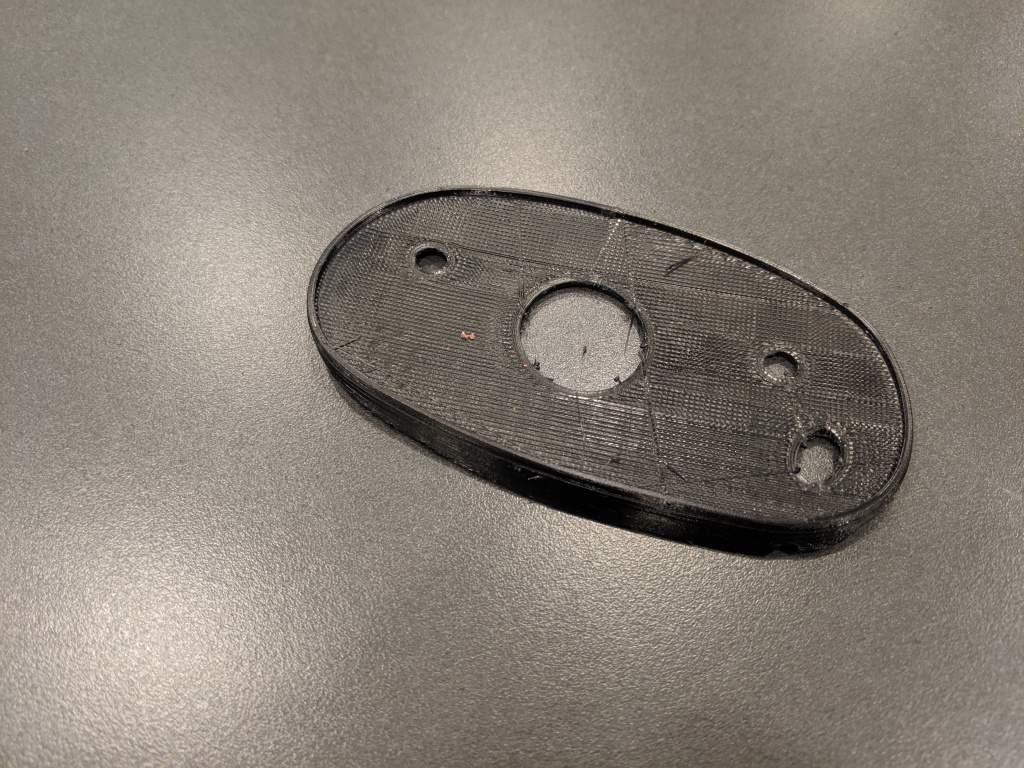
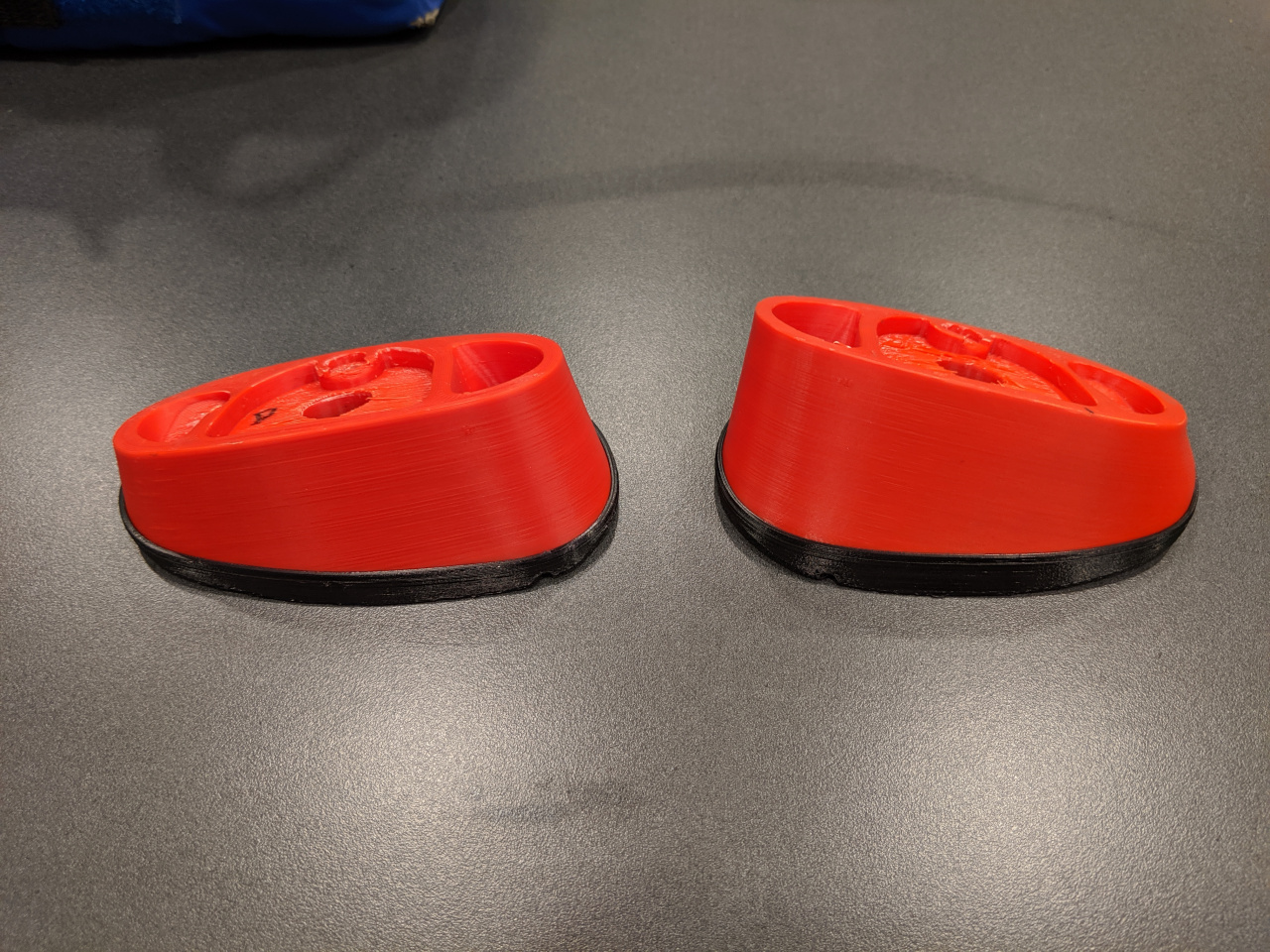
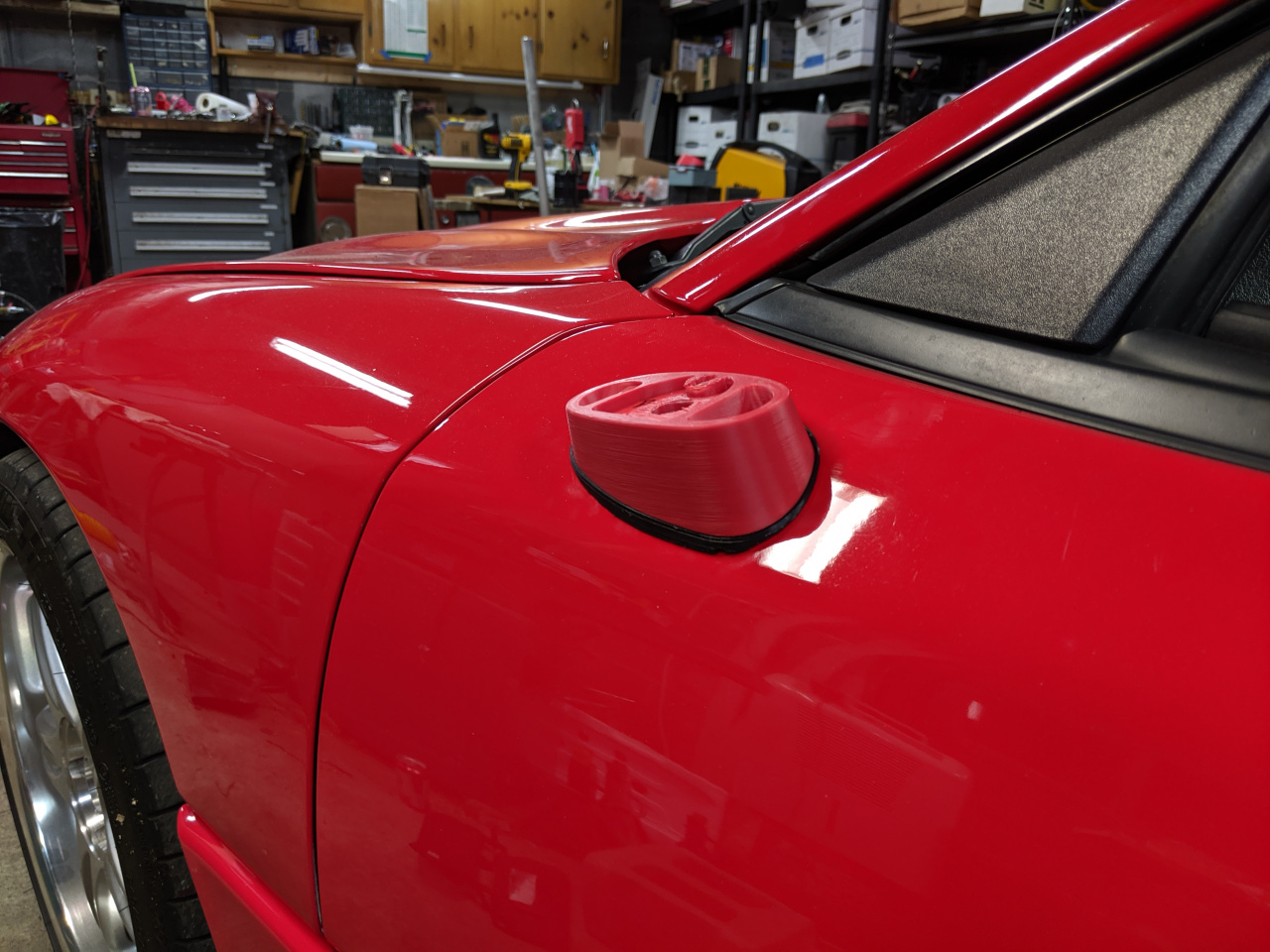
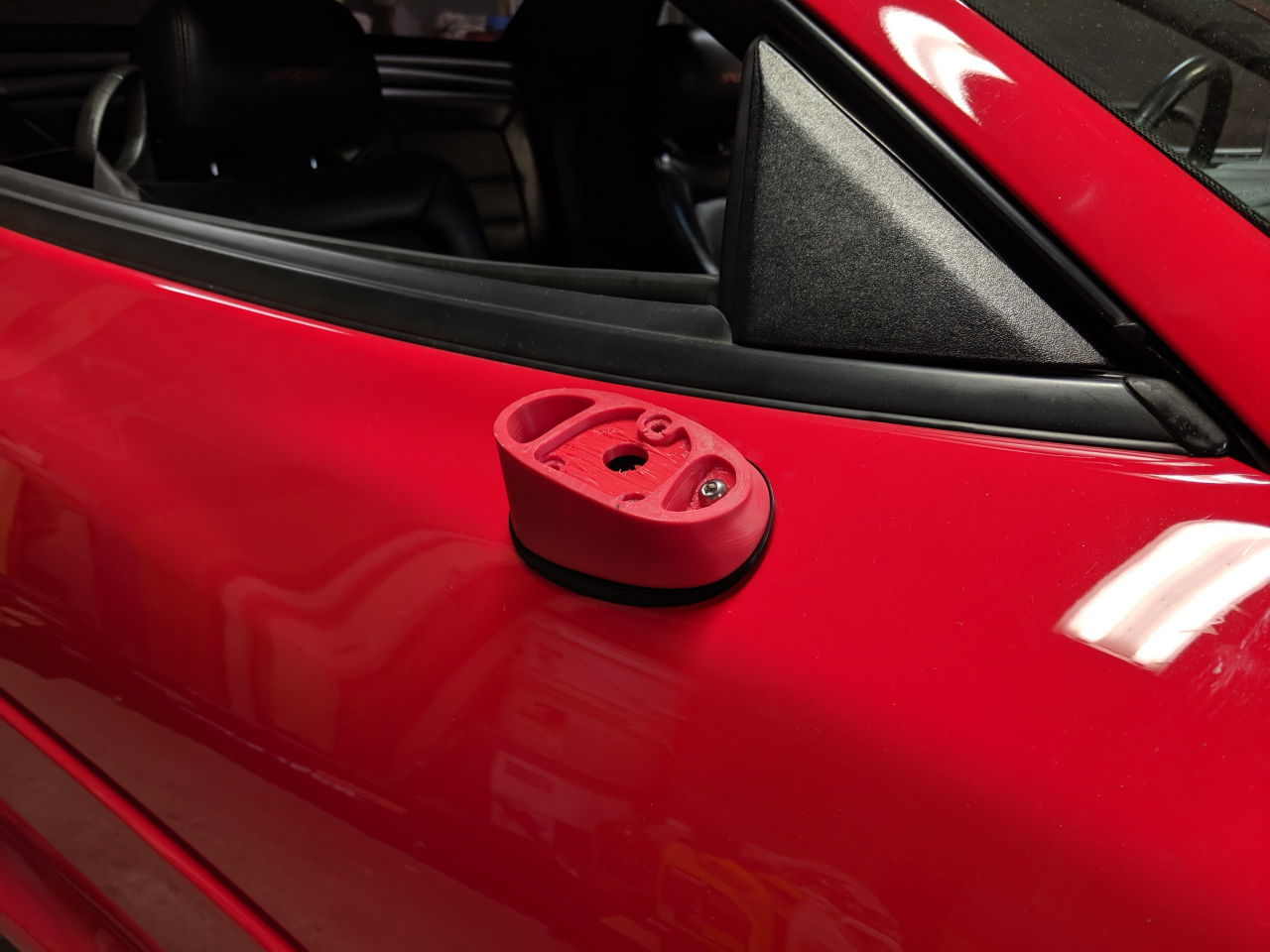
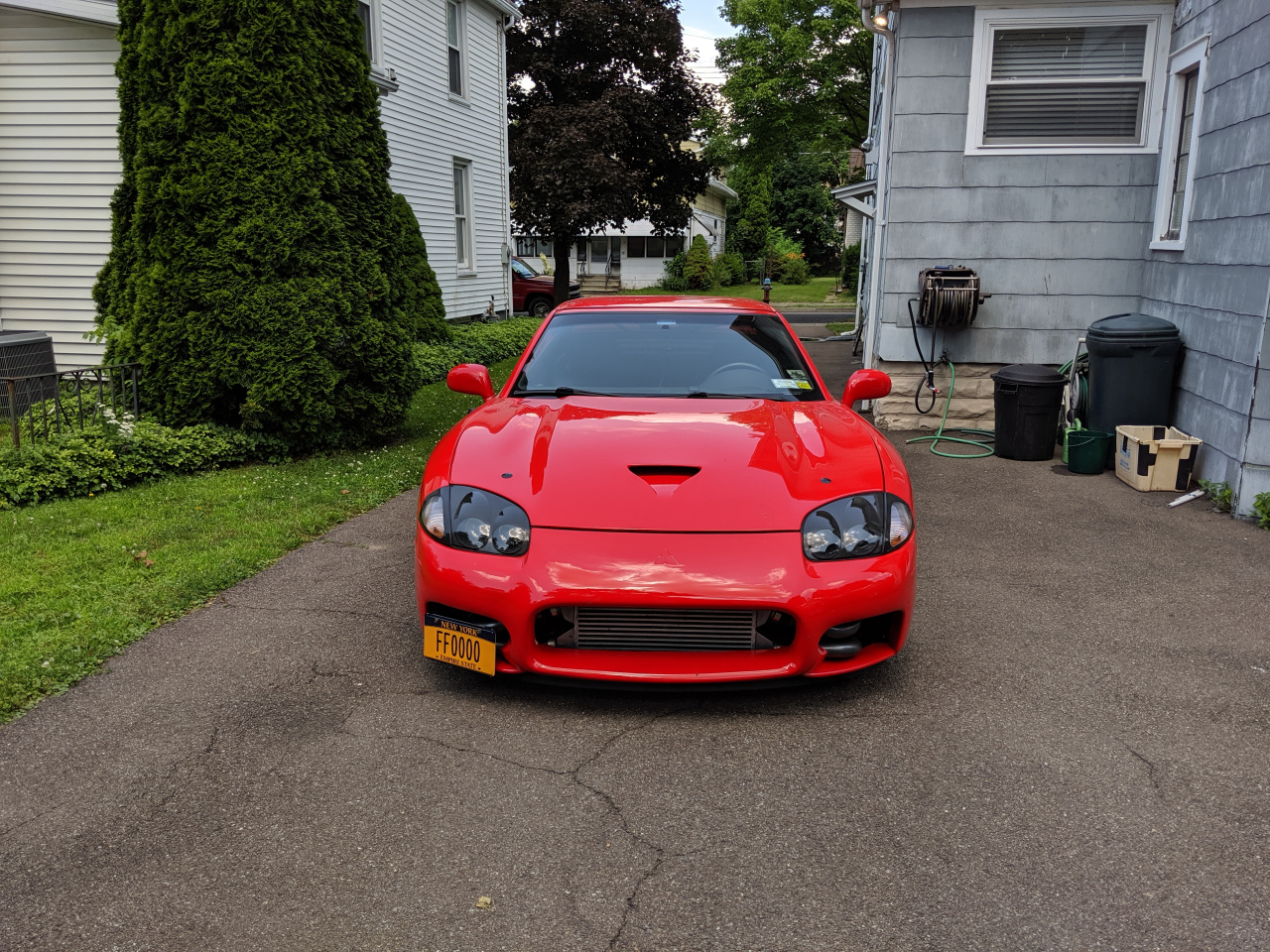
Collection of test prints